In the world of engineering and manufacturing, precision screws play a crucial role in ensuring the stability and functionality of various devices and structures. From delicate electronic gadgets to large – scale industrial machinery, these tiny components hold everything together. However, one common challenge they face is the tendency to loosen over time due to vibrations, temperature changes, or external forces. To combat this issue, several anti – loosening technologies have been developed.
Table of Contents
1. Mechanical Interlocking:
Mechanical interlocking is a fundamental and widely used anti – loosening method. It works by creating a physical barrier that prevents the screw from rotating freely. One common example is the use of washers. Flat washers distribute the load of the screw over a larger area, reducing the pressure on the surface and minimizing the chances of the screw head digging into the material. Spring washers, on the other hand, have a curved shape that provides a constant pre – load. When the screw starts to loosen, the spring washer tries to return to its original shape, creating a counter – force that keeps the screw tight.
Another form of mechanical interlocking is the use of lock nuts. These nuts have a special design, such as nylon inserts or distorted threads. The nylon insert in a nylon – insert lock nut grips the screw threads tightly, creating friction that resists loosening. Distorted – thread lock nuts have threads that are intentionally deformed in a way that they create an interference fit with the screw, preventing it from rotating easily.
2. Chemical Adhesives:
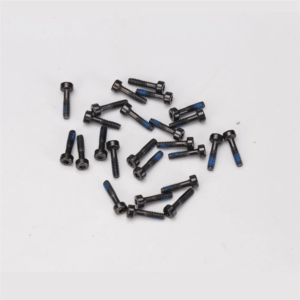
Chemical adhesives offer a reliable way to keep precision screws in place. Thread – locking compounds are a popular choice in this category. These compounds are applied to the screw threads before assembly. Once the screw is tightened, the compound cures and forms a strong bond between the screw and the mating thread. This bond is resistant to vibrations and external forces, effectively preventing the screw from loosening.
There are different types of thread – locking compounds available, each with varying degrees of strength and curing times. Some are designed for low – strength applications where disassembly may be required in the future, while others provide a permanent bond for high – stress situations. The application process is relatively simple, usually involving applying a small amount of the compound to the screw threads and then assembling the components as usual.
3. Friction – Based Methods:
Friction is a key factor in preventing screw loosening, and several technologies focus on increasing the friction between the screw and the mating surface. One approach is to use screws with special thread designs. For example, self – locking threads have a different pitch or profile compared to standard threads. These threads create a higher level of friction when engaged, making it more difficult for the screw to rotate and loosen.
Another friction – based method is the use of surface treatments on the screw or the mating part. Techniques such as knurling or roughening the surface can increase the coefficient of friction. When the screw is tightened against a rough surface, the increased friction helps to hold it in place. Additionally, some manufacturers use coatings on the screw threads that enhance friction and provide anti – corrosion properties at the same time.
4. Pre – Loading Techniques:
Pre – loading involves applying a specific amount of tension to the screw during assembly. This initial tension creates a clamping force that holds the components together tightly. By carefully controlling the pre – load, engineers can ensure that the screw remains tight even under varying loads and conditions.
One way to achieve pre – loading is through the use of torque wrenches. These tools allow the assembler to apply a precise amount of torque to the screw, which is directly related to the pre – load. Another method is the use of hydraulic or pneumatic tensioning devices. These devices can apply a more consistent and accurate pre – load, especially in large – scale industrial applications where multiple screws need to be tightened simultaneously.
5. Dual – Screw Systems:
In some cases, using two screws instead of one can provide better anti – loosening performance. Dual – screw systems work by distributing the load between two screws, reducing the stress on each individual screw. This can help to prevent loosening caused by overloading or uneven stress distribution.
One common dual – screw configuration is the use of a primary screw and a secondary screw. The primary screw is used to provide the main clamping force, while the secondary screw acts as a backup. If the primary screw starts to loosen, the secondary screw can still hold the components together, preventing a complete failure. This approach is often used in critical applications where safety and reliability are of utmost importance.
In conclusion, there are several effective anti – loosening technologies available for precision screws. Whether it’s through mechanical interlocking, chemical adhesives, friction – based methods, pre – loading techniques, or dual – screw systems, engineers have a range of options to choose from depending on the specific application requirements. By understanding these technologies and selecting the right one for the job, manufacturers can ensure that their products remain stable and reliable over time, even in the face of challenging operating conditions.