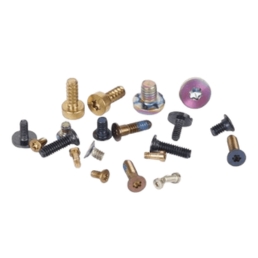
Precision screws are the unsung heroes in numerous industries, from aerospace and automotive to electronics and medical devices. Their small size belies their critical importance, as even the slightest deviation from specified dimensions can lead to malfunctions, safety hazards, or product failures. So, how can one accurately measure the dimensional accuracy of these tiny yet vital components? Let’s delve into the process step by step.
Table of Contents
1. Understanding the Basics of Dimensional Accuracy:
Before diving into measurement techniques, it’s essential to grasp what dimensional accuracy entails. In the context of precision screws, it refers to how closely the actual dimensions of the screw match the intended or specified dimensions. This includes parameters like diameter, length, thread pitch, and thread angle. Achieving high dimensional accuracy ensures that screws fit perfectly into their designated slots, engage correctly with nuts or threaded holes, and perform their intended function without issues.
2. The Importance of Precision Measuring Tools:
The first step in measuring dimensional accuracy is selecting the right tools. Traditional rulers or tape measures are far too imprecise for this task. Instead, professionals rely on specialized measuring instruments designed for high accuracy.
One such tool is the micrometer, which can measure diameters with incredible precision, often down to the thousandth of an inch or even smaller. For length measurements, calipers, both digital and analog, offer excellent accuracy and versatility, allowing for both inside and outside measurements. When it comes to threads, thread gauges are indispensable. These gauges come in various forms, such as pitch gauges for measuring thread pitch and thread angle gauges for ensuring the correct angle of the threads.
3. Measuring Diameter with a Micrometer:
Let’s start with measuring the diameter of a precision screw, a fundamental dimension that must be spot-on. To use a micrometer, first, ensure it’s clean and zeroed out. Place the screw between the anvil and spindle of the micrometer, making sure it’s centered and not tilted. Gently tighten the spindle until it just touches the screw, then read the measurement on the micrometer’s scale.
It’s crucial to take multiple measurements at different points along the screw’s length, as variations can occur due to manufacturing inconsistencies. By comparing these measurements to the specified diameter, one can determine if the screw meets the required accuracy standards. If the measurements vary significantly, it may indicate a problem with the manufacturing process or the need for further quality control checks.
4. Length Measurement Using Calipers:
Next up is measuring the length of the precision screw. Calipers are the go-to tool for this task. Similar to using a micrometer, start by ensuring the calipers are clean and zeroed. Open the jaws of the calipers wide enough to accommodate the screw, then gently close them until they make contact with both ends of the screw.
Digital calipers display the measurement directly on a screen, making it easy to read and record. Analog calipers, on the other hand, require reading the measurement from a scale, which may take a bit more practice but can be just as accurate. As with diameter measurements, it’s advisable to take multiple length measurements at different orientations to account for any potential bending or irregularities in the screw.
5. Thread Pitch and Angle Verification:
Threads are where precision screws truly shine, and ensuring their accuracy is paramount. Thread pitch, which refers to the distance between adjacent threads, can be measured using a pitch gauge. Simply select the appropriate gauge blade that matches the expected pitch, and see if it fits snugly between the threads without any gaps or overlaps.
Thread angle, which determines the shape of the threads, is equally important. A thread angle gauge is used for this purpose. Place the gauge against the side of the threads and check if the angle matches the specified value. Any deviation in thread pitch or angle can lead to difficulties in screwing the screw into a nut or threaded hole, or even cause damage to the components.
6. The Role of Statistical Process Control:
Measuring individual screws is essential, but for large-scale production, it’s also crucial to implement statistical process control (SPC). SPC involves collecting and analyzing data from multiple measurements to identify trends and patterns. By monitoring key dimensions over time, manufacturers can detect any shifts in the manufacturing process that may lead to dimensional inaccuracies.
For example, if the average diameter of screws starts to drift above the specified value, it could indicate a problem with the cutting tool or the machine settings. SPC allows for early intervention, preventing the production of a large number of non-conforming screws and reducing waste and costs.
7. Final Inspection and Quality Assurance:
After all the individual measurements and SPC analysis, a final inspection is necessary to ensure that every precision screw meets the required standards. This may involve a visual inspection to check for surface defects, such as scratches or burrs, as well as a functional test to verify that the screw can be screwed in and out smoothly without any issues.
Quality assurance teams play a vital role in this process, using their expertise and experience to make the final call on whether a screw is acceptable or not. By following a rigorous inspection process, manufacturers can guarantee that their precision screws are of the highest quality and will perform reliably in their intended applications.
In conclusion, measuring the dimensional accuracy of precision screws is a meticulous yet essential task. By using the right tools, following proper measurement techniques, implementing statistical process control, and conducting thorough inspections, manufacturers can ensure that their screws meet the stringent requirements of various industries, contributing to the safety and reliability of countless products around the world.