In industries ranging from aerospace to consumer electronics, stability under vibration is a critical requirement. Whether it’s a satellite orbiting Earth, a vehicle navigating rough terrain, or a medical device performing life-saving functions, components must remain securely fastened despite constant motion. Precision screws, though small, play an outsized role in achieving this reliability. This article explores how these specialized fasteners maintain stability in high-vibration environments, examining their design, material choices, and engineering innovations.
Table of Contents
1. The Science Behind Vibration-Induced Instability:
Vibrations generate dynamic forces that can loosen traditional fasteners over time. Even minor movements, when repeated thousands of times, create a phenomenon called self-loosening. This occurs because vibrations reduce the clamping force between threads, allowing screws to rotate incrementally. In high-stability applications, such as aircraft engines or industrial machinery, such loosening could lead to catastrophic failures.
Precision screws address this challenge through advanced engineering. Their design minimizes the risk of self-loosening by optimizing thread geometry, material properties, and installation techniques. Unlike standard screws, which prioritize general-purpose use, precision variants are tailored to resist vibrational forces while maintaining structural integrity.
2. Thread Design: The Foundation of Stability:
The threads of a precision screw are not just a helical pattern—they’re a carefully calculated solution to vibration resistance. One key innovation is the use of fine threads with a tighter pitch (distance between threads). Fine threads increase the number of contact points between the screw and mating material, distributing forces more evenly. This reduces the likelihood of slippage under vibration.
Another approach involves self-locking threads, which feature asymmetrical profiles. These threads create a wedge effect, increasing friction between the screw and the component it secures. When vibrations attempt to rotate the screw, the asymmetric design resists movement, effectively “locking” the fastener in place. This principle is widely used in aerospace and automotive applications, where safety depends on zero tolerance for loosening.
3. Material Selection: Balancing Strength and Flexibility:
Precision screws are often crafted from materials that resist fatigue and deformation. High-grade stainless steel, titanium alloys, and advanced composites are common choices. These materials offer a unique combination of strength and elasticity, allowing them to absorb vibrational energy without losing their grip.
For example, titanium alloys are favored in aerospace for their high strength-to-weight ratio. They withstand extreme vibrations without corroding, making them ideal for spacecraft exposed to harsh environmental conditions. In medical devices, biocompatible polymers with vibration-damping properties ensure implants remain secure while minimizing patient discomfort.
4. Surface Treatments: Enhancing Grip Under Stress:
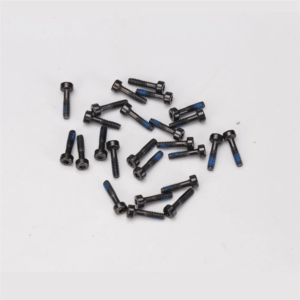
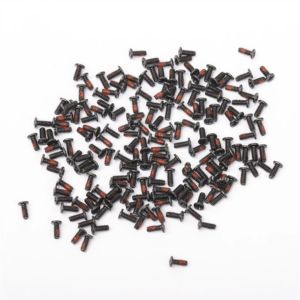
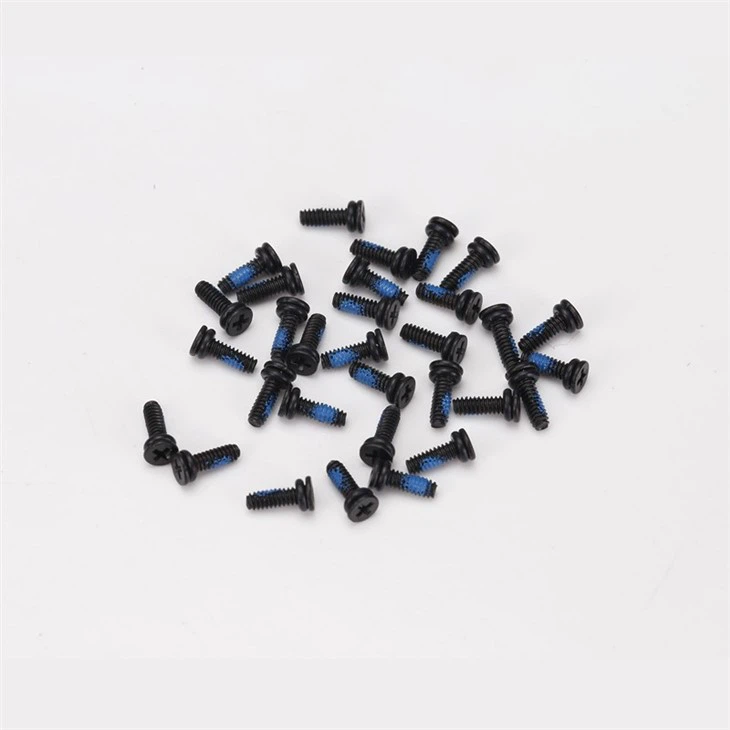
Even the smoothest screw can lose traction under vibration. Surface treatments address this by increasing friction between the screw and the mating surface. Techniques like thread locking coatings (e.g., nylon patches or adhesive compounds) create a barrier that resists rotational forces. These coatings are activated during installation, filling microscopic gaps between threads to prevent loosening.
Another method is surface roughening, which involves etching or texturing the screw’s exterior. This increases the coefficient of friction, ensuring the fastener stays put even when subjected to high-frequency vibrations. Such treatments are critical in automotive engines, where screws must endure constant shaking without compromising performance.
5. Installation Techniques: The Role of Torque and Angle Control:
Precision screws are only as effective as their installation process. Over-tightening can strip threads or warp materials, while under-tightening leaves components vulnerable to vibration. Advanced torque-controlled tools ensure screws are fastened to exact specifications, eliminating human error.
Some applications use angle-controlled tightening, where screws are rotated to a specific angle rather than a torque value. This accounts for material elasticity, ensuring consistent clamping force across different components. For instance, in electronic assemblies, this method prevents damage to delicate circuits while guaranteeing stability.
6. Real-World Applications: From Skyscrapers to Smartphones:
Precision screws’ versatility makes them indispensable across industries. In construction, they secure structural components in skyscrapers, withstanding wind-induced vibrations and seismic activity. In consumer electronics, they hold together compact devices like laptops and smartphones, ensuring internal parts remain intact despite daily handling.
The automotive sector relies on precision screws to fasten engine components, suspension systems, and safety features. Even a single loose screw in a braking system could lead to failure, underscoring the importance of vibration-resistant fasteners. Similarly, in renewable energy, screws in wind turbines must endure constant rotational forces without compromising efficiency.
7. The Future of Vibration-Resistant Fasteners:
As technology evolves, so do the demands placed on precision screws. Innovations like smart screws embedded with sensors are emerging, allowing real-time monitoring of clamping force and vibration levels. These devices could predict maintenance needs, preventing failures before they occur.
Advances in materials science are also pushing boundaries. Researchers are developing biodegradable polymers for eco-friendly applications and ultra-lightweight alloys for space exploration. The goal remains the same: to create fasteners that offer unwavering stability in an increasingly dynamic world.
8. Conclusion:
Precision screws are unsung heroes in the quest for stability. Through meticulous design, material science, and installation techniques, they counteract the forces of vibration that threaten to undo even the most robust structures. From the depths of the ocean to the edges of space, these tiny components ensure safety, reliability, and performance. As industries continue to innovate, the humble screw will remain a cornerstone of engineering excellence—proving that sometimes, the smallest details make the biggest difference.
By understanding the principles behind precision screws, engineers and consumers alike can appreciate the complexity hidden within everyday objects. The next time you pick up a smartphone or board an airplane, remember: stability starts with a screw.