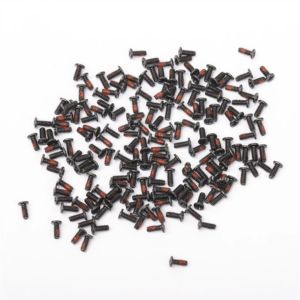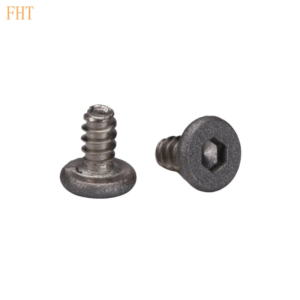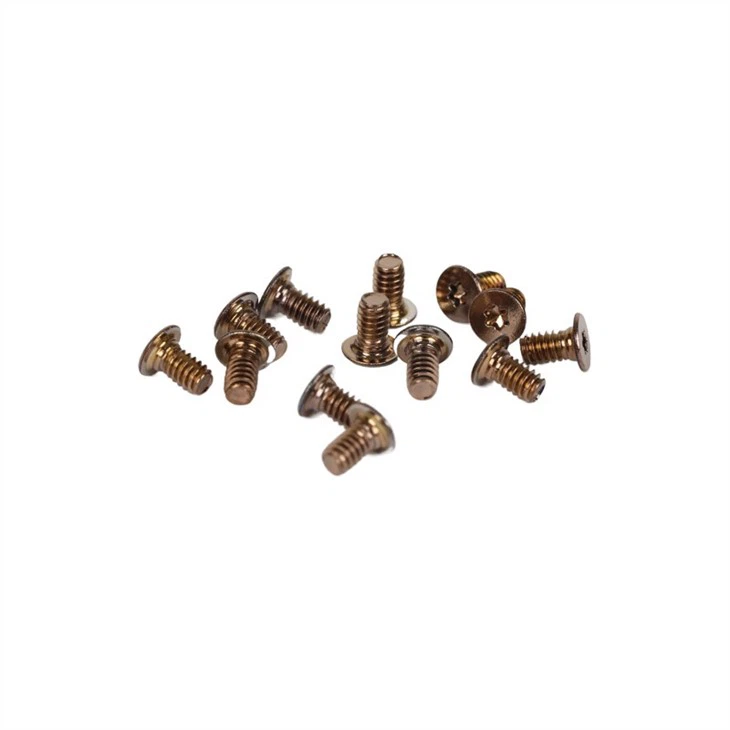
In the world of manufacturing and engineering, precision screws play a pivotal role. These tiny yet crucial components are widely used in various industries, from electronics to aerospace. But what exactly sets precision screws apart from regular ones? One key factor lies in their tolerance standards. This article delves into the intricacies of these standards, exploring their significance, types, and how they impact different applications.
Table of Contents
1. The Significance of Tolerance in Precision Screws:
Tolerance, in the context of precision screws, refers to the allowable deviation from a specified dimension. It’s a measure of how closely a screw’s actual size matches its intended design. Why is this so important? Well, in high-precision applications, even the slightest deviation can lead to significant problems. For instance, in the electronics industry, where components are packed tightly together, a screw that’s too long or too wide could damage delicate circuits or prevent proper assembly. Similarly, in aerospace, where safety is paramount, a misaligned screw due to tolerance issues could compromise the structural integrity of an aircraft.
Precision screws are designed to fit snugly into their intended holes or slots, ensuring a secure and reliable connection. Tolerance standards ensure that these screws meet the exact specifications required for their application, minimizing the risk of errors and malfunctions. By adhering to strict tolerance guidelines, manufacturers can guarantee the quality and performance of their products, giving customers peace of mind.
2. Types of Tolerance Standards for Precision Screws:
There are several types of tolerance standards that apply to precision screws, each serving a specific purpose. One common standard is the diameter tolerance, which specifies the allowable variation in the screw’s diameter. This is crucial because the diameter determines how well the screw fits into its corresponding hole. A too-large diameter could make insertion difficult or impossible, while a too-small diameter could result in a loose fit and potential vibration or movement.
Another important tolerance standard is the pitch tolerance, which applies to threaded screws. The pitch refers to the distance between adjacent threads, and tolerance ensures that this distance remains consistent throughout the length of the screw. Inconsistent pitch can lead to problems during assembly, such as difficulty in threading the screw into a nut or hole, or uneven distribution of load when the screw is tightened.
Length tolerance is yet another critical standard, particularly for screws used in applications where precise positioning is essential. A screw that’s too long could protrude beyond its intended limit, interfering with other components or causing safety hazards. Conversely, a screw that’s too short might not provide enough engagement, compromising the strength and stability of the connection.
3. How Tolerance Standards Are Determined:
The determination of tolerance standards for precision screws is a complex process that involves several factors. First and foremost, the intended application of the screw plays a significant role. Different industries and applications have varying requirements for precision and reliability, which in turn influence the tolerance levels that are acceptable.
Material properties also come into play. The type of material used to manufacture the screw can affect its dimensional stability and resistance to wear and tear. For example, screws made from high-strength alloys might be able to tolerate tighter tolerances than those made from softer materials, as they’re less likely to deform or stretch under load.
Manufacturing processes and equipment also contribute to the determination of tolerance standards. Advanced machining techniques and precision tools can produce screws with tighter tolerances, but these often come at a higher cost. Manufacturers must balance the need for precision with the practical considerations of cost and production efficiency.
4. The Impact of Tolerance Standards on Product Quality:
Adhering to strict tolerance standards has a direct impact on the quality of precision screws and, by extension, the products in which they’re used. Screws that meet or exceed tolerance requirements are more likely to perform as intended, providing a secure and reliable connection that stands the test of time. This, in turn, enhances the overall quality and durability of the finished product, reducing the likelihood of failures or malfunctions.
On the other hand, screws that fail to meet tolerance standards can lead to a host of problems. These might include difficulty during assembly, increased wear and tear, and even catastrophic failures in extreme cases. In industries where safety is a top priority, such as aerospace or medical devices, the consequences of using non-compliant screws can be severe, ranging from equipment damage to loss of life.
5. Challenges in Meeting Tolerance Standards:
While the benefits of adhering to tolerance standards are clear, achieving these standards is not without its challenges. One of the main obstacles is the cost associated with precision manufacturing. Tighter tolerances require more sophisticated equipment, skilled labor, and rigorous quality control measures, all of which add to the production cost. Manufacturers must carefully weigh these costs against the potential benefits to determine the most cost-effective approach.
Another challenge is the variability inherent in the manufacturing process itself. Even with the most advanced equipment and techniques, there’s always some degree of variation in the dimensions of produced screws. Manufacturers must continuously monitor and adjust their processes to minimize this variation and ensure that their products remain within the specified tolerance limits.
6. The Future of Tolerance Standards for Precision Screws:
As technology continues to advance, the future of tolerance standards for precision screws looks promising. New materials and manufacturing processes are emerging that offer even greater precision and reliability at lower costs. For example, additive manufacturing techniques like 3D printing are enabling the production of complex screw designs with tight tolerances that would be difficult or impossible to achieve using traditional methods.
At the same time, the demand for precision screws is growing across a wide range of industries. As products become more sophisticated and compact, the need for high-precision components like screws will only increase. This, in turn, will drive further innovation in tolerance standards and manufacturing techniques, ensuring that precision screws continue to meet the evolving needs of the market.
In conclusion, tolerance standards are a critical aspect of precision screws, ensuring their quality, reliability, and performance in a wide range of applications. By understanding these standards and the challenges involved in meeting them, manufacturers can produce screws that meet the exacting requirements of their customers, driving innovation and progress across multiple industries.