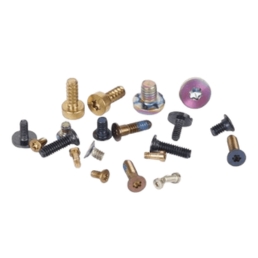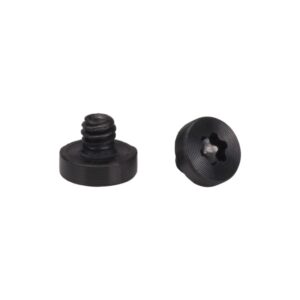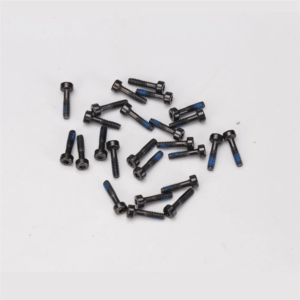
In the intricate world of manufacturing and engineering, precision screws play a pivotal role. These tiny yet mighty components are essential for holding various parts together with accuracy and strength. One of the key features that define a precision screw is its thread type. Understanding the common thread types is crucial for professionals in fields like automotive, aerospace, electronics, and medical devices. Let’s delve into the most prevalent thread types of precision screws.
Table of Contents
1. Machine Threads: The Standard Bearers:
Machine threads are perhaps the most widely recognized and utilized thread type in precision screws. These threads are designed to mate with a corresponding threaded hole or a nut. They are characterized by their consistent pitch and diameter, which ensures a secure and precise fit. Machine threads come in two main varieties: coarse and fine.
Coarse machine threads have a larger pitch, meaning there are fewer threads per inch. This design offers several advantages. Firstly, it allows for faster assembly and disassembly as the screw can be turned more quickly. Secondly, coarse threads are less likely to cross-thread, which is when the screw doesn’t align properly with the hole and gets stuck. They are commonly used in applications where speed of assembly is important and where the load-bearing capacity isn’t the primary concern, such as in some consumer electronics.
Fine machine threads, on the other hand, have a smaller pitch with more threads per inch. This results in a stronger connection as the increased number of threads distributes the load more evenly. Fine threads are ideal for applications that require high precision and strength, like in aerospace components where every ounce of weight and every bit of stability matter.
2. Self-Tapping Threads: The Self-Sufficient Option:
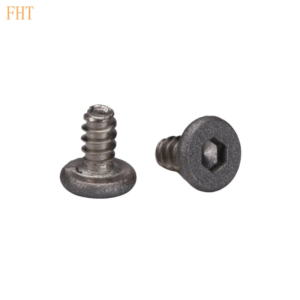
Self-tapping screws are a unique breed. As the name suggests, they have the ability to create their own threads as they are driven into a material. This eliminates the need for a pre-tapped hole, saving time and effort during the assembly process. There are two main types of self-tapping threads: thread-forming and thread-cutting.
Thread-forming self-tapping screws work by deforming the material around the screw as it is inserted. The material is pushed aside to create the thread path. These screws are commonly used in softer materials like plastics and some metals. They provide a tight fit and are less likely to loosen over time due to the way the material conforms to the screw’s threads.
Thread-cutting self-tapping screws, on the other hand, actually cut into the material as they are inserted, similar to a tap. This creates a clean and precise thread. They are often used in harder materials where thread-forming screws might not be effective. However, they can generate more heat during installation and may require more force to drive in.
3. Metric Threads: The Global Standard:
In an increasingly globalized manufacturing industry, metric threads have become a widely adopted standard. Metric threads are based on the metric system of measurement, with the pitch and diameter specified in millimeters. This provides a consistent and universal way of defining screw threads across different countries and industries.
One of the main advantages of metric threads is their precision. The metric system allows for very fine gradations in thread size, which is essential in applications where exact fit and tolerance are required. For example, in the medical device industry, where components need to fit together with extreme accuracy, metric threads are often the preferred choice. Additionally, metric threads are compatible with a wide range of international standards, making it easier to source components from different suppliers around the world.
4. Unified Threads: The American Classic:
Unified threads, also known as Unified National threads, are the standard thread type in the United States and some other countries that follow American engineering practices. They are similar to metric threads in that they provide a consistent way of defining screw threads, but they are based on the inch measurement system.
Unified threads are divided into several series, including the Unified Coarse (UNC) and Unified Fine (UNF) series. The UNC series is similar to coarse machine threads, offering fast assembly and disassembly, while the UNF series is comparable to fine machine threads, providing greater strength and precision. Unified threads are widely used in a variety of industries in the United States, from automotive manufacturing to construction.
5. Square Threads: The Powerhouses:
Square threads are a less common but highly specialized thread type. They are characterized by their square-shaped profile, which provides a high level of efficiency in power transmission applications. Square threads have a larger contact area between the screw and the nut compared to other thread types, which reduces friction and allows for more force to be transmitted with less energy loss.
These threads are commonly used in applications such as lead screws in machine tools, where precise and powerful linear motion is required. The high efficiency of square threads also makes them suitable for applications where energy conservation is important, like in some renewable energy systems. However, square threads are more difficult to manufacture than other thread types, which can make them more expensive.
In conclusion, the world of precision screws is rich with a variety of thread types, each with its own unique characteristics and applications. From the versatile machine threads to the self-sufficient self-tapping threads, the globally recognized metric threads to the American classic unified threads, and the powerful square threads, understanding these different types is essential for anyone involved in manufacturing and engineering. By choosing the right thread type for the job, professionals can ensure that their components fit together precisely, operate efficiently, and stand the test of time.